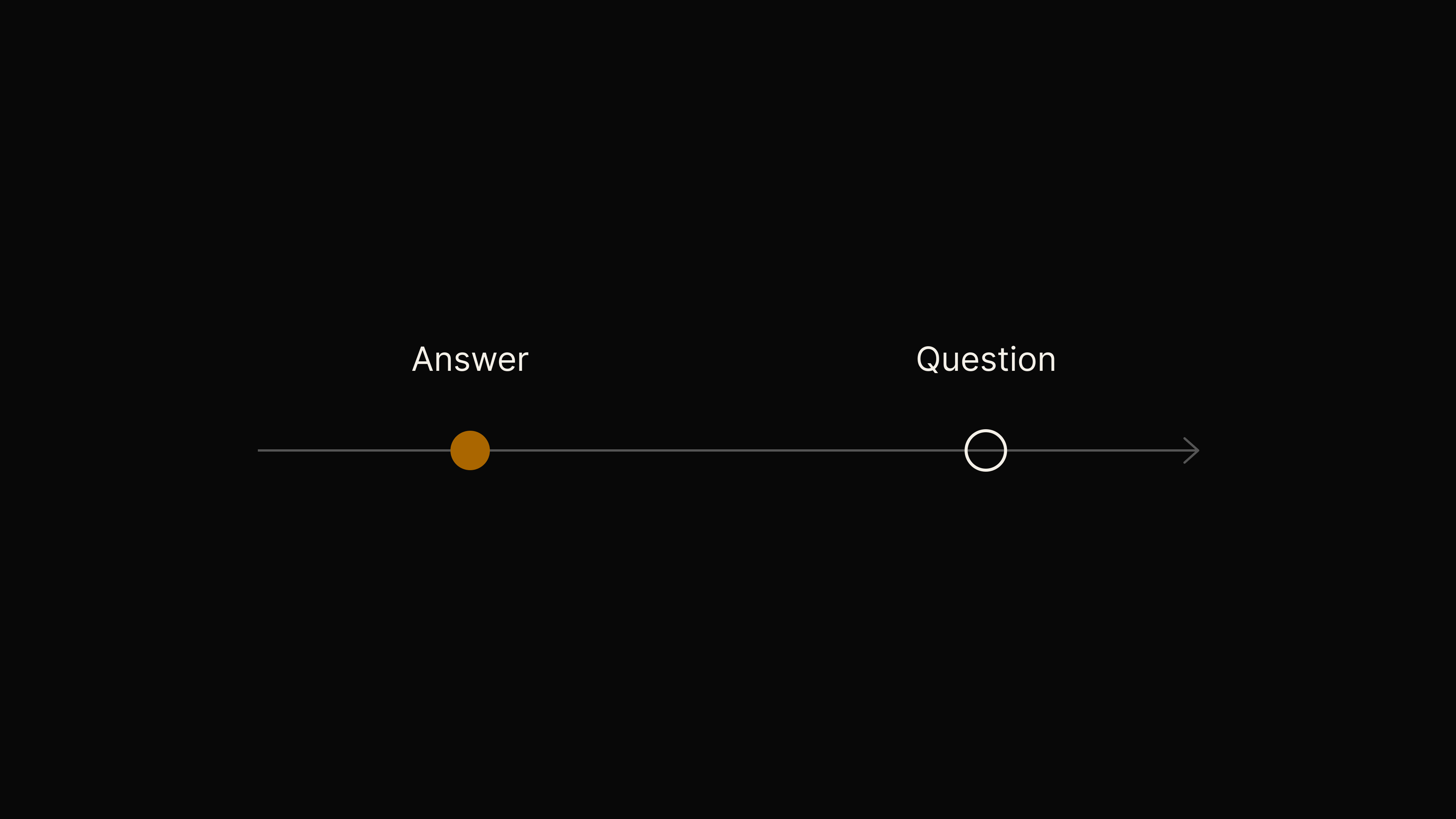
We keep searching so we don’t have to look
After more than 100 conversations about creating better workplaces, I’ve begun to wonder if their recurrence is telling us something. What if we don’t need to search harder for better answers. What if we need to examine the lens shaping what we’re searching for?

Barry O'Reilly recently shared ten conversations with executives who have led major transformations at Vanguard, Wells Fargo, McDonald's, American Airlines, Skyscanner, DBS Bank, Slack, and elsewhere.
From those conversations, he identified five principles:
- Build systems that help people do their best work.
- Give decisions the context they need.
- Use technology to strengthen human judgment.
- Create the conditions for others to succeed.
- Measure transformation through outcomes, not activity.
It's thoughtful advice. And it sounds familiar.
Over the years, I've held more than 100 conversations through Forward Thinking Workplaces with leaders, practitioners, and pioneers exploring many of the same questions. Thirty of those conversations were gathered into a book published by Apress.
How do we create better workplaces?
How do we help people do their best work?
How do we make better decisions, lead more effectively, build trust, and create the conditions for meaningful change?
Different people. Different organizations. Different language. Yet many of the same principles kept appearing.
Listen more deeply. Create greater trust. Give people more agency. Focus on outcomes. Make work more human. Lead from a different place.
There is real wisdom in all of it. Barry's collection adds more.
But after more than a decade of these conversations, I find myself asking a new question:
Why do we still need to keep having them?
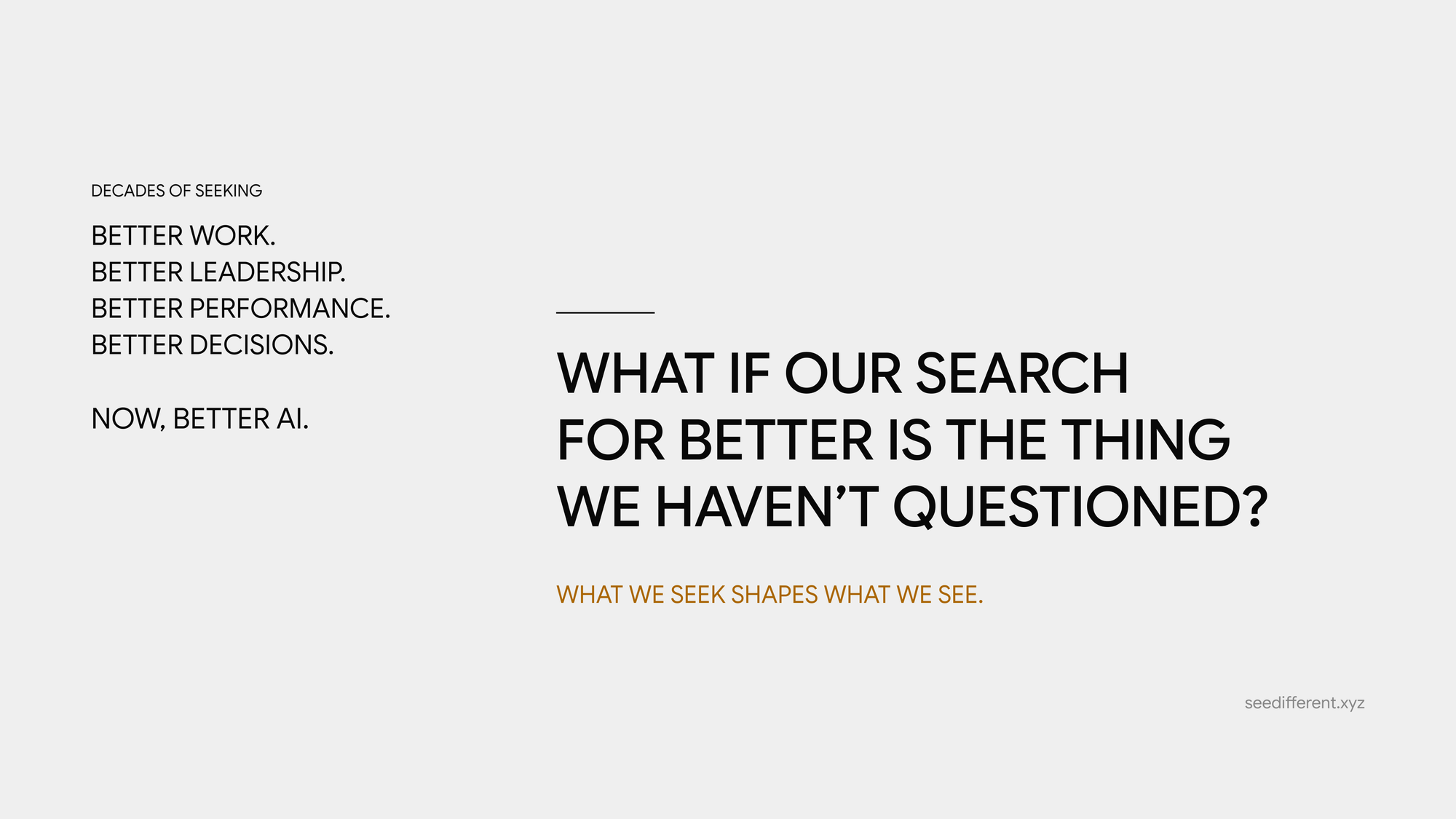
We've been talking about better work, better leadership, better performance, and better decisions for decades. The methods change. The technology changes. The conversation keeps circling and growing louder.
Now AI arrives with another promise of better:
Better insights. Better judgment. Better decisions. Better outcomes.
But the search for better isn't neutral.
To search for better is to have already decided that something is lacking. That judgment occurs before the problem is defined, before the evidence is examined, before anyone begins looking.
Decisions are downstream.
Before the decision comes the judgment. Before the judgment comes the lens. And what we seek shapes what that lens allows us to see.
Searching and looking are not the same act. A search points attention forward, at a state that does not exist yet. Looking points it at what is here. The two cannot happen at once, and only one of them can be scheduled, funded, and reported on. So the search may not be failing at its job. It may be succeeding at a quieter one. As long as we are searching, we are occupied, and what is actually in front of us stays unexamined. That would explain the persistence better than any missing framework does.
Decades of a louder conversation may be the sound of that working.
Which brings me back to one of Barry's principles:
Use technology to strengthen human judgment.
I don't disagree with it. I would only ask what strengthening means. A judgment can be faster, better informed, and more consistent, and still be the same judgment — formed by the same lens, reaching for the same kind of answer. Strengthening a judgment leaves the source of that judgment untouched. And the source is where the search was set in motion.
So before we strengthen human judgment, might we first learn to see what is shaping it?
If we bring the same fears, assumptions, identities, and past experience to AI, it won't free us from the old pattern. It will make the pattern more capable.
AI can help us search farther, process faster, and decide sooner. But it cannot ensure that the mind directing the search has questioned what it believes it is looking for, or why.
Perhaps the persistence of these workplace challenges isn't evidence that we need another framework, another transformation, or more powerful technology.
What if it's evidence that we've been working downstream?
The 100-plus Forward Thinking Workplaces conversations were never wasted. They helped reveal a pattern I couldn't yet name. Again and again, we were approaching the same unseen threshold:
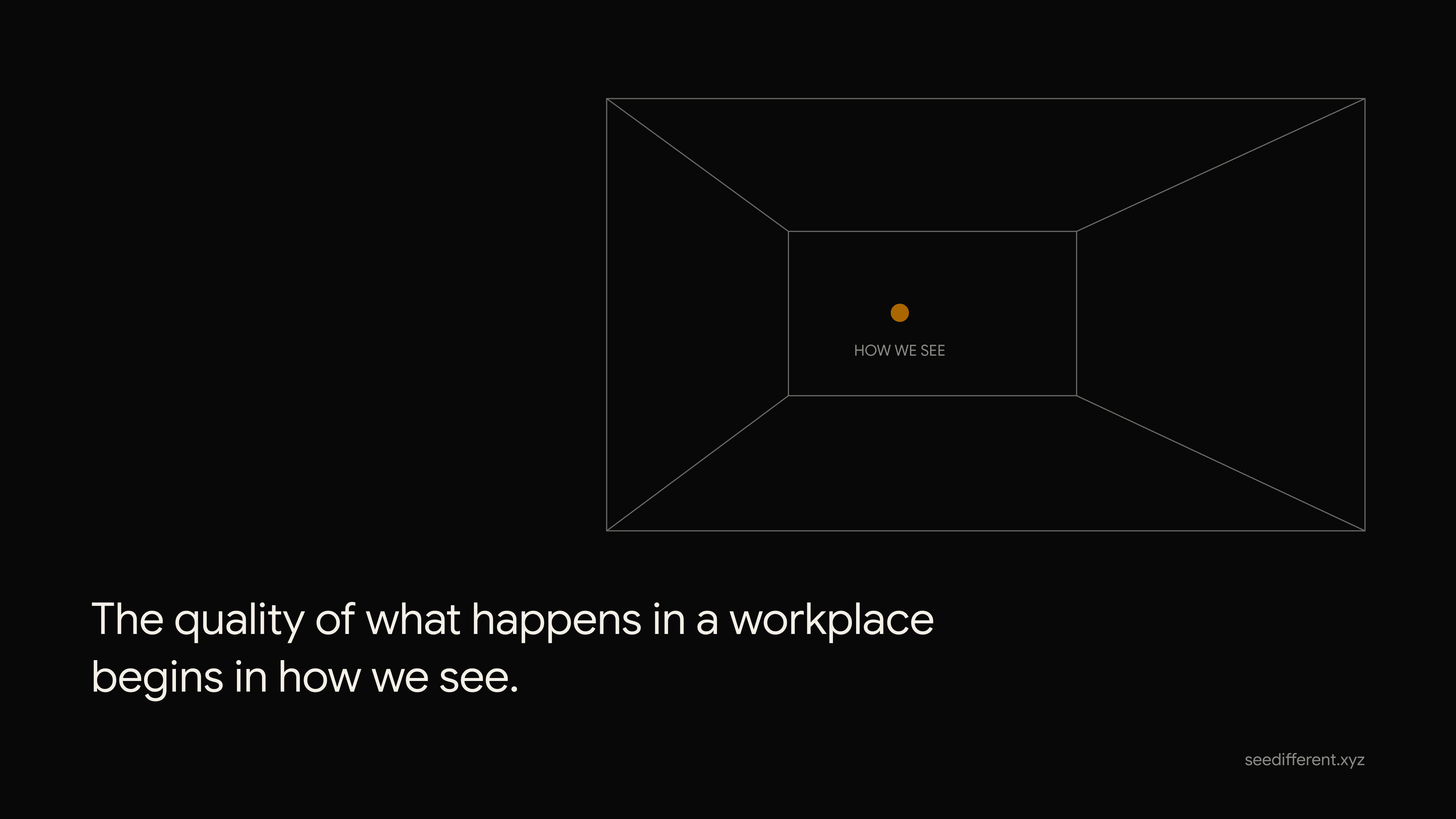
The deeper invitation now may not be to search harder for better workplaces. It may be to stop long enough to look at the lens through which we have been searching.
What we seek shapes what we see.
Above all else, learn to see differently.
That is the territory I now explore in The Perception Miracle and practice with others in The Perception Space.
— Bill
 More about Bill →