The Improvements Were Real
The problems that keep returning may be coming back because we keep solving them downstream of the decision that produced them.

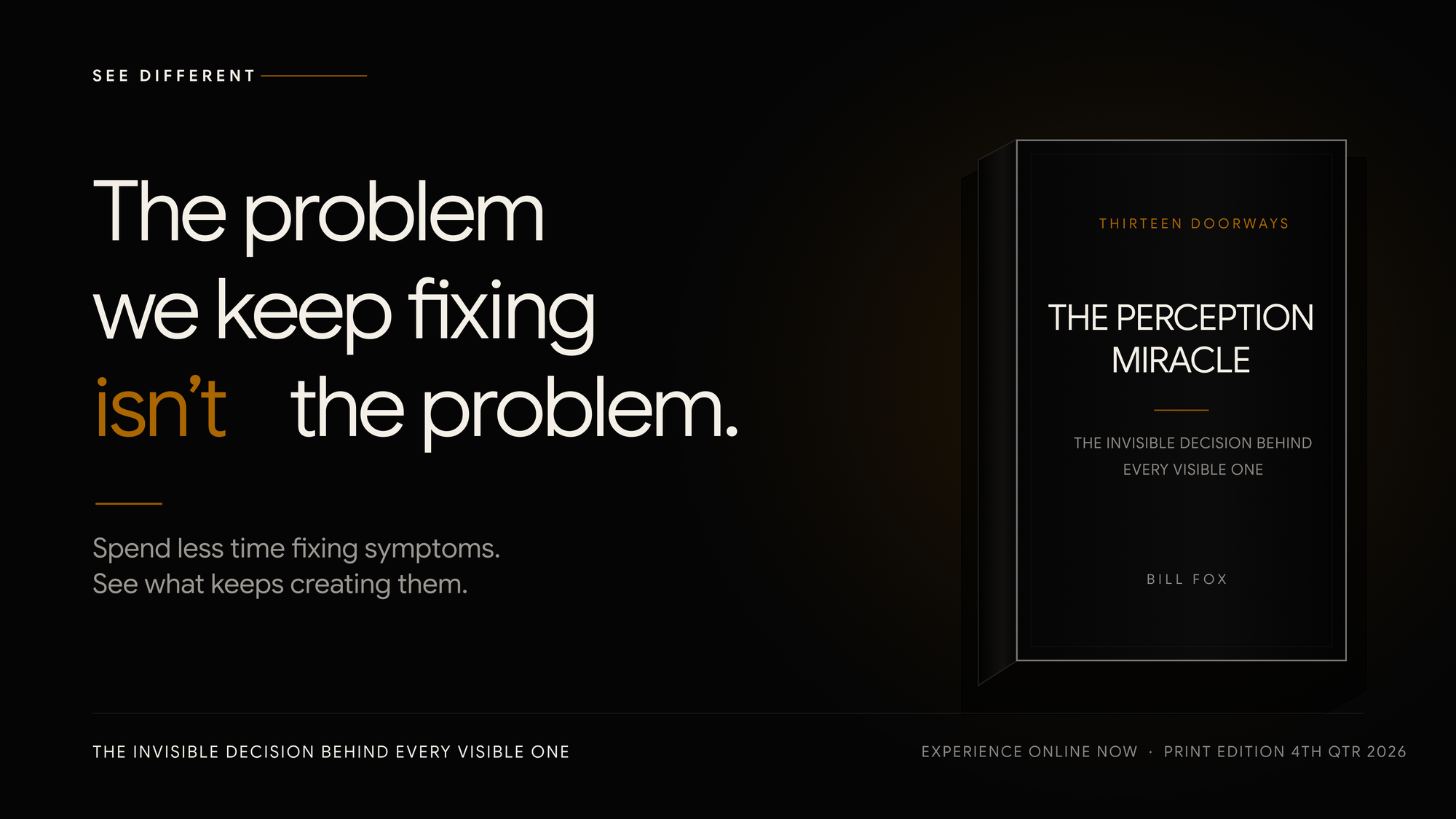
So why does the same pattern keep coming back?
Some problems survive every solution we apply to them. We change the strategy, the system, the behavior, the leader, or the technology. Things improve for a time. Then the same pattern returns in another form.
We usually treat that return as a failure of execution.
What if it's what we see?
Before every visible decision there is an invisible one: what we notice, what we overlook, and what we decide something means. It happens in milliseconds, and it rarely announces itself as a decision at all.
Four familiar problems, looked at from there.
Safety
The policies help. The stated intent is real. And when in the moment an unwanted truth arrives in the room, something has already decided whether it lands as information or as a threat. This happens before anyone chooses how to respond.
Trust
We build it deliberately through agreements, transparency, consistency and time. Underneath all of it, each person is already deciding what the other one is protecting.
Engagement
We measure it, survey it, and work to raise it. What are we assuming about people when we set out to engage them?
Performance
What decides what counts as performance here and for who and what?
Then there is AI.
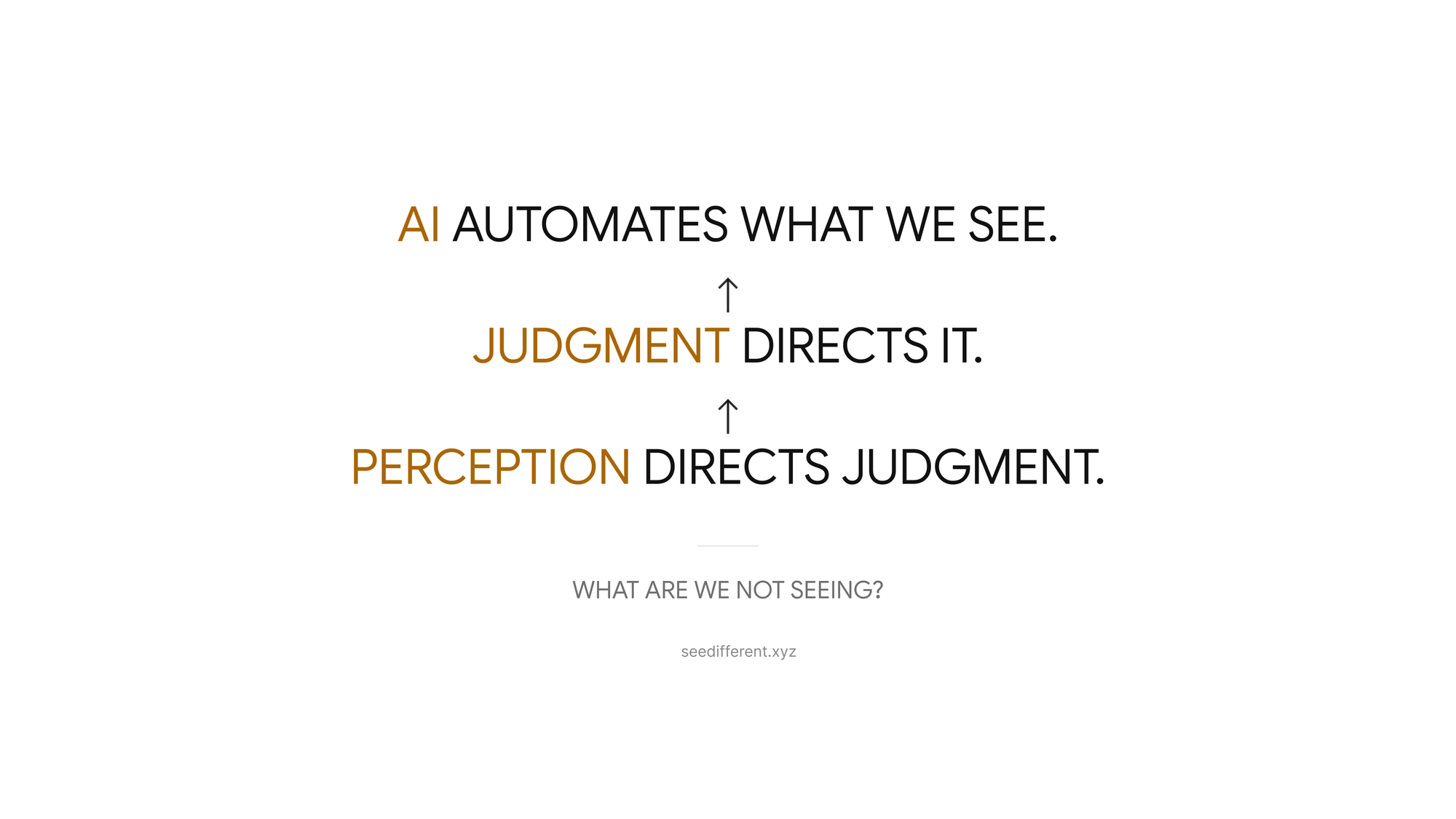
It collapses the time between what we assume, what we act on, and what follows. It can amplify our intelligence, and it can just as easily amplify an assumption we never knew we were making faster than we can notice we made it.
Which makes the invisible decision harder to keep ignoring.
What if the next frontier of work isn't another solution to the problems we can already see?
What if it's learning to see what is creating them?
The visible problem may not be the problem. It may be where the unseen problem becomes visible.
Which one have you watched come back the most?
— BF
P.S. This is the inquiry at the heart of The Perception Space. Next: August 19. Or start with Odyssey — free, 54 minutes. Next: August 27.